

 by admin
 19 February 2026
In 2026, the term ghosting has shifted from relationships to the office, or more specifically, to the boardroom. We’ve all seen or experienced it: the invisible remote team member who has gradually stopped actively participating in the group chat, or the manager who only initiates emails on setting critical work tasks, failing to reach out to that same team member, or those invisible figures on a screen during your weekly team catch-up. We, at Mobile Team Challenge (MTC), brand this emotional ghosting, and it means your hybrid culture is losing its human heart.
When physical proximity disappears, communication often becomes purely transactional. We lose the non-verbal cues, such as the 90% of communication that happens through body language and tone, that keep teams connected.
Is your organisation feeling more like a collection of freelancers than a unified team? It might be time to invest in emotionally intelligent leadership training in the UK.
What is the Cost of the Transactional Leader?
Many leaders fall into the trap of thinking that as long as the work is getting done, the team is fine. However, our research shows that without emotional connection, Social Awareness and Relationship Management (two of our core EQ pillars) start to erode.
The signs of emotional ghosting include:
- Decreased Proactivity: Team members stop taking the initiative because they don’t feel seen.
- Burnout: Leaders become overwhelmed by the Circle of Concern rather than focusing on their Circle of Influence.
- Increased Conflict: Misunderstandings grow because people can no longer read the intent behind a Slack message.
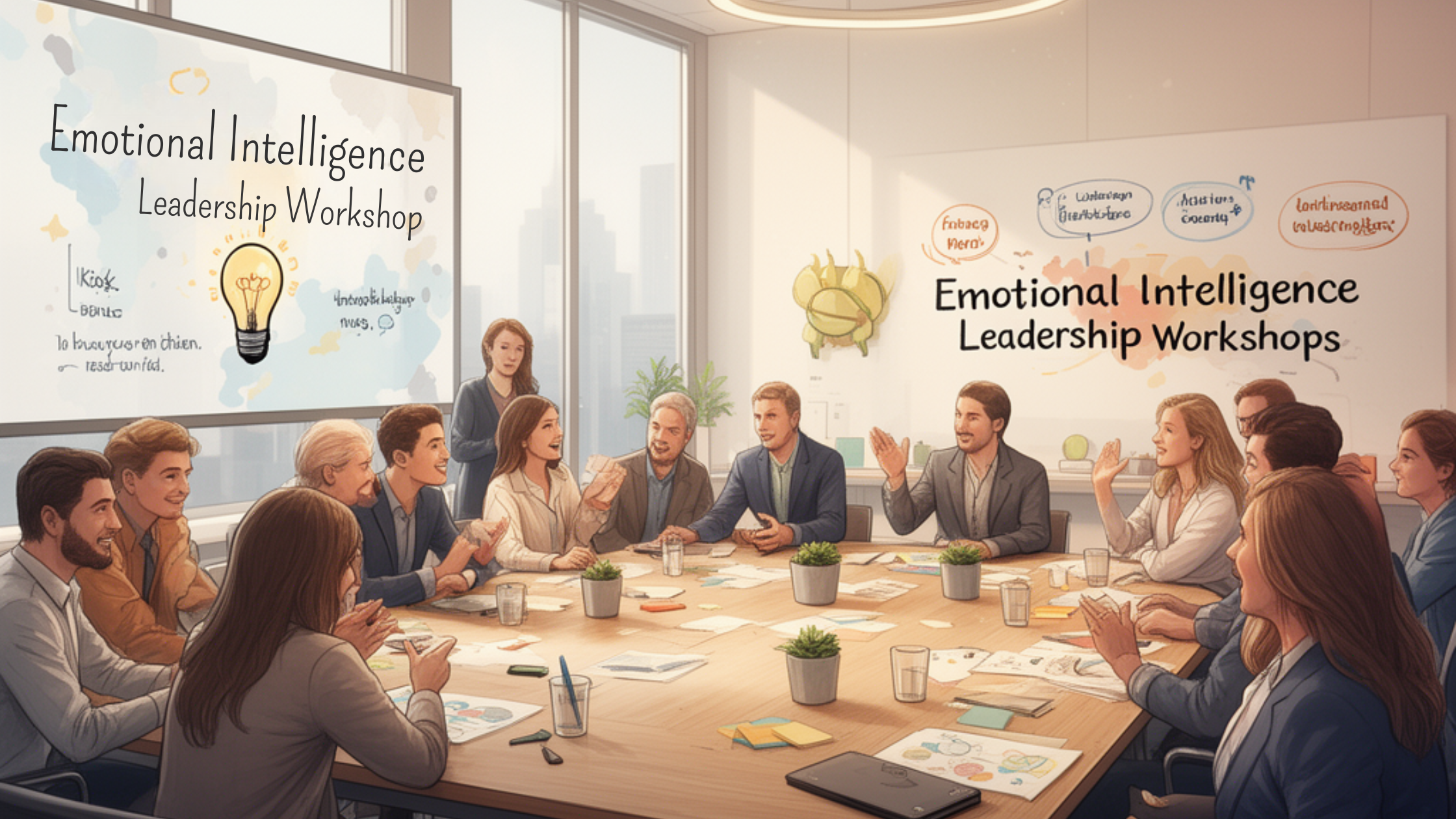
To solve this, we provide emotional intelligence leadership workshops in the UK that go beyond theory. We don’t just talk about empathy; we use experiential tools to show leaders how to listen out for the non-verbal communication that happens even in a digital space.
Bridging the Gap with the 8 E.I. Behaviours
At Mobile Team Challenge (MTC), we focus on the 8 Emotional Intelligence Behaviours that are critical for hybrid success. These are:
- Adaptability
- Empathy
- Conscientiousness
- Motivation
- Stress Resilience
- Self-awareness
- Decision-making
- Influence.
When a leader is trained to be emotionally intelligent, they don’t just manage tasks; they manage the energy of the team.
For example, instead of a standard check-in, an MTC-trained leader might use Empathic Listening to uncover why a team member is feeling demoralised before it leads to a resignation.
Our workshops also provide a 29-page British Psychological Society (BPS) accredited profile. This isn’t just a generic report; it’s a blueprint that shows exactly how your leaders’ behaviours stack up under the unique pressures of 2026’s hybrid working environment.
From Ghosting to Gathering
The solution to a disconnected culture isn’t more meetings; it’s better quality interactions. We help organisations create a Practice Field, which is a safe environment where teams can use our MTC Experiential Kits to rehearse new, winning behaviours.
Whether online or in person, these activities force teams to collaborate, communicate, and reconnect on a human level.
By moving from a problem-fixing mindset to one of appreciative inquiry, we help you identify what made your team great in the first place and how to replicate that success across your hybrid network.
Call Us to Take the First Step
Don’t let your team become a group of ghosts. If you want to restore the heart to your organisation and see a measurable shift in performance, Mobile Team Challenge (MTC) is here to help. Contact us for a free, no-obligation demonstration of our equipment and workshops at your location. Let us show you how we create game-changing behaviours for the leaders of tomorrow.
We explored this topic further in a recent LinkedIn post on Emotionally Intelligent Leadership Development.
If hybrid leadership is on your radar in 2026, it’s well worth a read:
👉 Take a look here and join the conversation.


