

 by admin
 27 August 2026
* Recent research suggests that we have at least 6,000 thoughts a day
* Psychologists say that 98 to 99 per cent of our thoughts are habitual. In other words, they are basically the same thoughts we had yesterday, and the day before yesterday, and the day before that.
*The Cleveland Clinic estimates that 80 per cent of our thoughts are negative.
THAT’S 4,800 NEGATIVE THOUGHTS A DAY!!!
Long-term negative thinking can have a significant impact on both mental and physical wellbeing. While occasional negative thoughts are normal, a persistent pattern of pessimism, self-criticism, or expecting the worst can gradually affect how you feel, behave, and perform.
MENTAL HEALTH EFFECTS
• Increased anxiety and worry: Negative thinking often keeps the mind focused on threats, problems, and worst-case scenarios, which can lead to chronic anxiety.
• Greater risk of depression: Repeated negative thoughts can create feelings of hopelessness, low motivation, and sadness, all of which are linked to depression.
• Lower self-esteem and confidence: Constant self-criticism can make people doubt their abilities, lead to signs of Imposter Syndrome and avoid opportunities
• Reduced resilience: Negative thinkers often find it harder to recover from setbacks because they interpret challenges as evidence of failure rather than opportunities for learning.
PHYSICAL HEALTH EFFECTS
• Chronic stress: Negative thinking can keep the body’s stress response activated, increasing levels of stress hormones such as cortisol.
• Poor sleep quality: Rumination and overthinking can make it difficult to relax and sleep well.
• Weakened immune system: Ongoing stress may reduce the body’s ability to fight illness effectively.
• Higher risk of health problems: Long-term stress has been associated with cardiovascular issues, high blood pressure, and other physical health concerns.
RELATIONSHIP AND CAREER EFFECTS
Negative thinking can also:
• Make communication more defensive or critical.
• Reduce trust and connection with others.
• Limit career growth by increasing fear of failure and reducing willingness to take on challenges.
BRAIN IMPACT
Research suggests that repeatedly following negative thought patterns strengthens those neural pathways, making negative thinking more automatic over time. The good news is that the brain remains adaptable, and healthier thinking habits can also be learned and reinforced.
In simple terms, long-term negative thinking acts like a lens that makes life’s challenges appear larger and opportunities appear smaller. Over time, it can affect mood, health, relationships, and performance, but with awareness and practice, those patterns can be changed.
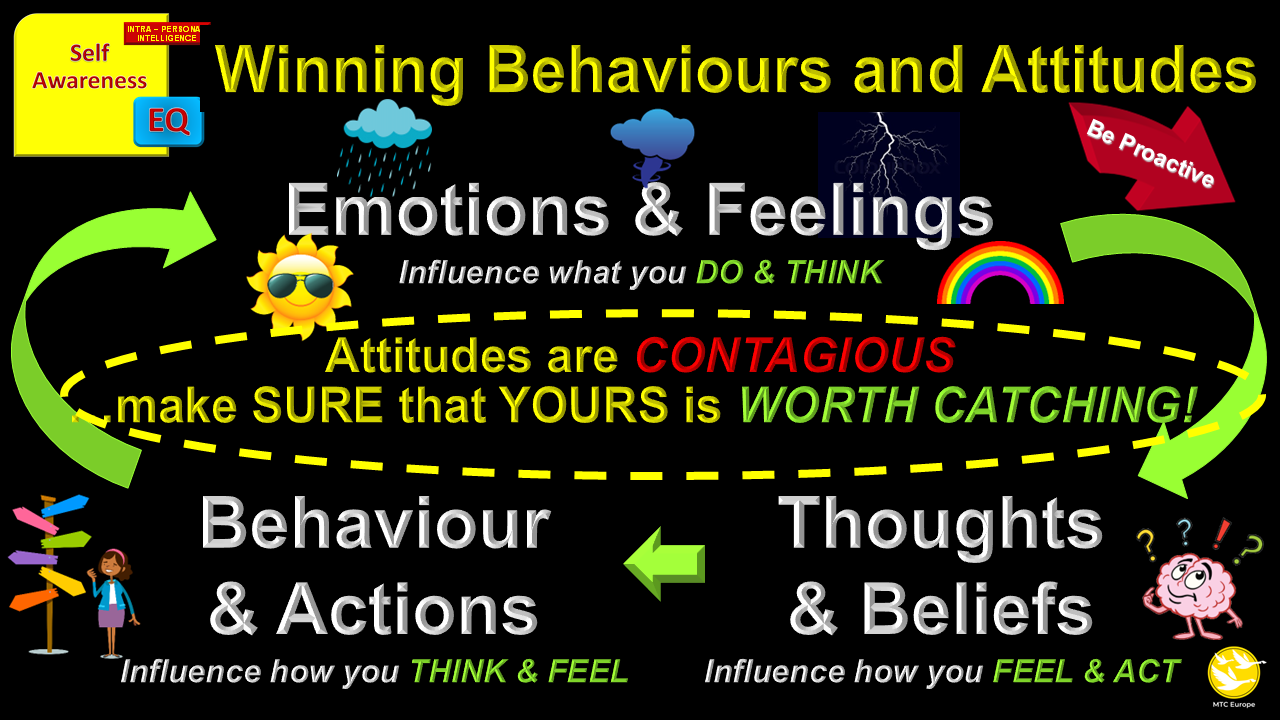
Every time we share a negative comment with our colleagues… e.g. “The Traffic was awful today!”…. or… “I see our Football Team Lost again last night!!…we need a new Manager!..”… our comment triggers a reaction in the brain of the person we are speaking to – and our negative comment has a negative impact on us…and them!
ATTITUDES ARE CONTAGIOUS…LET’S MAKE SURE THAT OURS IS WORTH CATCHING!! https://www.mtceurope.co.uk/online-perma/


